
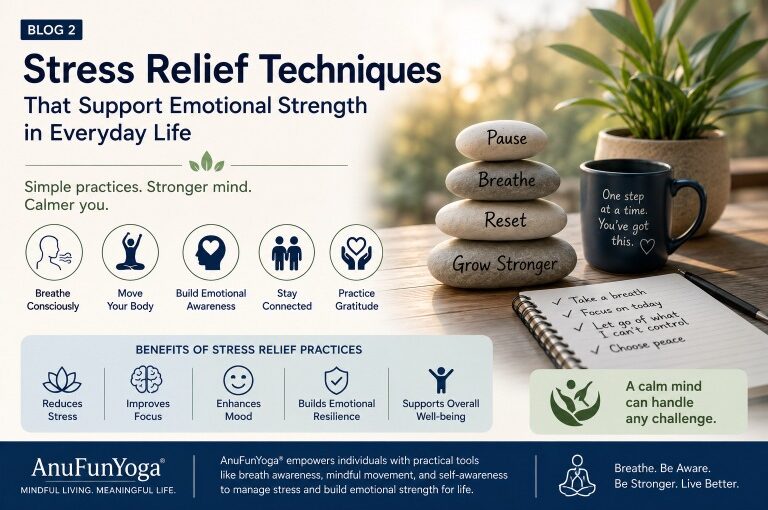
Introduction
Stress is a natural part of life. Every individual experiences moments of pressure, uncertainty, deadlines, responsibilities, and unexpected challenges. While a certain amount of stress can motivate people to take action and solve problems, ongoing stress can affect emotional well-being, physical health, relationships, and overall quality of life.
Many people search for quick stress relief techniques, hoping to eliminate stress completely. However, lasting well-being comes not from avoiding stress but from developing the emotional strength needed to navigate life’s challenges effectively.
Stress relief and emotional resilience are closely connected. When individuals learn healthy ways to manage stress, they become better equipped to handle setbacks, maintain emotional balance, and respond thoughtfully rather than react impulsively.
Developing sustainable stress-management habits can help individuals feel more grounded, focused, and resilient in everyday life.
Understanding Everyday Stress
Stress can arise from many different sources, including:
- Work and career demands
- Financial responsibilities
- Family obligations
- Academic pressures
- Health concerns
- Social expectations
- Major life transitions
While these challenges may differ from person to person, the body’s response to stress is often similar.
Recognizing the early signs of stress allows individuals to choose stress relief techniques that support long-term emotional balance.
Common signs of stress include:
- Difficulty concentrating
- Irritability
- Fatigue
- Sleep disturbances
- Muscle tension
- Anxiety
- Feeling overwhelmed
Recognizing these signs early is an important step toward managing stress effectively.
Why Quick Fixes Often Fall Short
When stress levels rise, many people look for immediate relief.
Common responses may include:
- Excessive screen time
- Emotional eating
- Avoidance
- Overworking
- Withdrawal from social interaction
While these behaviors may provide temporary comfort, they rarely address the underlying causes of stress.
The most effective stress relief techniques focus on sustainable habits rather than temporary distractions or quick fixes.
Sustainable stress relief focuses on developing healthier habits and coping strategies that support long-term emotional well-being.
Rather than asking, “How can I avoid stress?” a more useful question is, “How can I respond to stress more effectively?”
The Connection Between Stress and Emotional Strength
Emotional strength does not mean suppressing emotions or pretending challenges do not exist.
Instead, it involves:
- Self-awareness
- Adaptability
- Healthy coping skills
- Emotional regulation
- Resilience during difficult situations
People who develop emotional strength are often better able to:
- Remain calm under pressure
- Recover from setbacks
- Maintain perspective
- Communicate effectively
- Make thoughtful decisions
Stressful experiences do not disappear, but individuals become more capable of navigating them.
Effective Stress Relief Techniques
There is no single technique that works for everyone. However, several practices consistently support emotional well-being.
Conscious Breathing
Breathing patterns often change during periods of stress.
Slow, mindful breathing can help individuals:
- Feel more grounded
- Reduce tension
- Improve focus
- Create a sense of calm
Even a few minutes of conscious breathing can help interrupt cycles of stress and overwhelm.
Physical Movement
Regular exercise remains one of the most recommended stress relief techniques for reducing physical tension and improving mood.
Movement is one of the most effective ways to manage stress.
Activities such as:
- Walking
- Stretching
- Yoga
- Dancing
- Recreational sports
can help release tension while improving mood and energy levels.
Gratitude Practice
Gratitude helps shift attention away from constant worry and toward appreciation.
Taking a few moments each day to recognize positive experiences can support emotional balance and resilience.
Meaningful Connection
Supportive relationships play an important role in managing stress.
Talking with trusted friends, family members, or mentors often helps people gain perspective and feel less isolated during difficult times.
The AnuFunYoga® Approach to Stress Relief
While many stress-relief approaches focus on temporary relaxation, AnuFunYoga® emphasizes developing emotional strength alongside stress management. The practice encourages individuals to cultivate self-awareness, conscious breathing, mindfulness, and healthy lifestyle habits that help them respond more effectively to everyday pressures.
Through community wellness programs and educational initiatives, AnuFunYoga® promotes practical tools that support emotional balance in daily life. Participants are encouraged to recognize stress patterns, understand emotional triggers, and develop healthier responses to challenging situations.
Rather than viewing stress as something to be eliminated completely, AnuFunYoga® teaches that greater awareness can transform how individuals relate to stress. By building resilience through consistent practice, people can learn to navigate difficulties with greater clarity, confidence, and emotional stability.
Creating a Sustainable Stress-Management Routine
Managing stress is not about finding one perfect technique.
Instead, it involves creating a combination of supportive habits that can be practiced consistently.
A sustainable routine may include:
- Daily mindful breathing
- Regular movement
- Adequate sleep
- Healthy nutrition
- Time in nature
- Gratitude practices
- Meaningful social connections
Small actions repeated regularly often create greater benefits than occasional intensive efforts.
Frequently Asked Questions
Can stress ever be completely eliminated?
Stress is a normal part of life. The goal is not to eliminate stress entirely but to develop healthier ways of responding to it.
How quickly do stress-relief techniques work?
Some techniques, such as conscious breathing, may provide immediate benefits. Long-term emotional strength develops through consistent practice over time.
Is emotional strength something people are born with?
No. Emotional strength can be developed through self-awareness, healthy habits, supportive relationships, and life experience.
Do stress-relief practices need a lot of time?
Not necessarily. Even a few minutes of mindful breathing, movement, or reflection each day can support emotional well-being.
Conclusion
Stress may be unavoidable, but suffering unnecessarily from stress is not.
By developing healthy coping strategies, increasing self-awareness, and building emotional strength, individuals can respond more effectively to life’s challenges.
The most effective stress relief techniques are often simple, practical, and sustainable. When practiced consistently, they not only reduce stress but also strengthen resilience, confidence, and overall well-being.
Looking for practical stress relief techniques and holistic wellness support? Contact us today to begin your journey toward a healthier, more balanced life.
In the end, true stress management is not about escaping life’s pressures. It is about developing the inner resources needed to meet them with greater balance, clarity, and strength.