
Introduction
Modern life moves quickly. Between work responsibilities, family commitments, financial concerns, social obligations, and constant digital connectivity, many people find themselves feeling overwhelmed and mentally exhausted.
One of the most effective ways to achieve mindfulness for stress relief is by practicing present-moment awareness. This simple yet powerful approach helps individuals manage everyday challenges with greater calm and clarity.
Stress has become so common that it is often accepted as a normal part of daily life. Yet when stress is left unmanaged, it can affect emotional well-being, concentration, relationships, and overall quality of life.
One of the most effective ways to manage everyday stress is through mindfulness.
Mindfulness is the practice of paying attention to the present moment with awareness and without judgment. Rather than becoming trapped in worries about the future or regrets about the past, mindfulness helps individuals engage more fully with what is happening right now.
While mindfulness is often associated with meditation, its benefits extend far beyond formal practice. It can be integrated into everyday activities and used as a practical tool for managing daily challenges.
Understanding Mindfulness
Mindfulness is not about clearing the mind or eliminating thoughts.
Instead, it involves:
- Observing thoughts without becoming overwhelmed by them
- Recognizing emotions without immediately reacting
- Bringing awareness to the present moment
- Developing a more balanced relationship with stress
When practiced regularly, mindfulness can help individuals respond to challenges with greater calm, clarity, and self-awareness.
Practicing mindfulness for stress relief encourages greater awareness of thoughts, emotions, and reactions, making it easier to respond calmly to everyday situations.
The goal is not perfection but presence.
Why Mindfulness Supports Stress Relief
Many stressful situations become more difficult because of how the mind responds to them.
For example, a single challenge may trigger:
- Worry about future outcomes
- Negative assumptions
- Self-criticism
- Emotional reactivity
Mindfulness helps interrupt these patterns.
By becoming aware of thoughts and emotions as they arise, individuals can create space between an experience and their response to it. One of the greatest benefits of mindfulness for stress relief is its ability to interrupt negative thought patterns before they become overwhelming.
This awareness often leads to:
- Better emotional regulation
- Improved decision-making
- Reduced feelings of overwhelm
- Greater resilience during stressful situations
Mindfulness During Everyday Activities
One of the greatest strengths of mindfulness is that it can be practiced anywhere.
Mindfulness for stress relief can be incorporated into everyday routines, making it a practical habit rather than a separate activity.
Mindful Commuting
Many people spend their commute worrying about the day ahead or replaying past events.
Instead, mindfulness encourages individuals to:
- Notice their surroundings
- Observe their breathing
- Bring attention to the present moment
Even a few minutes of mindful awareness can help reduce mental tension before the day begins.
Mindfulness at Work
Workplace stress often stems from multitasking and constant mental stimulation.
Mindfulness at work may include:
- Taking short breathing breaks
- Focusing on one task at a time
- Pausing before responding to difficult situations
These small practices can improve focus while reducing unnecessary stress.
Mindfulness in Relationships
Stress often affects communication.
Mindful listening allows individuals to:
- Be fully present during conversations
- Reduce reactive responses
- Improve understanding and empathy
When people feel heard and understood, relationships often become healthier and more supportive.
Using Mindfulness During Emotional Challenges
Everyone experiences difficult emotions such as frustration, disappointment, anger, or anxiety.
Mindfulness does not ask people to suppress these emotions.
Instead, it encourages them to:
- Acknowledge what they are feeling
- Observe emotional reactions with curiosity
- Avoid impulsive responses
This awareness often prevents emotional situations from escalating unnecessarily.
Over time, mindfulness helps individuals develop greater emotional balance and resilience.
The AnuFunYoga® Approach to Mindfulness
AnuFunYoga® encourages individuals to bring mindfulness into everyday experiences rather than limiting it to formal meditation sessions. The philosophy recognizes that awareness can be cultivated while walking, working, communicating, eating, or engaging in daily responsibilities.
Through wellness programs, community initiatives, and practical lifestyle practices, AnuFunYoga® promotes mindfulness as a living experience rather than a separate activity. Participants are encouraged to observe their thoughts, emotions, and habits with greater awareness while developing healthier responses to stress.
By integrating mindfulness into everyday life, individuals can strengthen emotional balance, improve self-awareness, and create a deeper sense of connection with themselves and others.
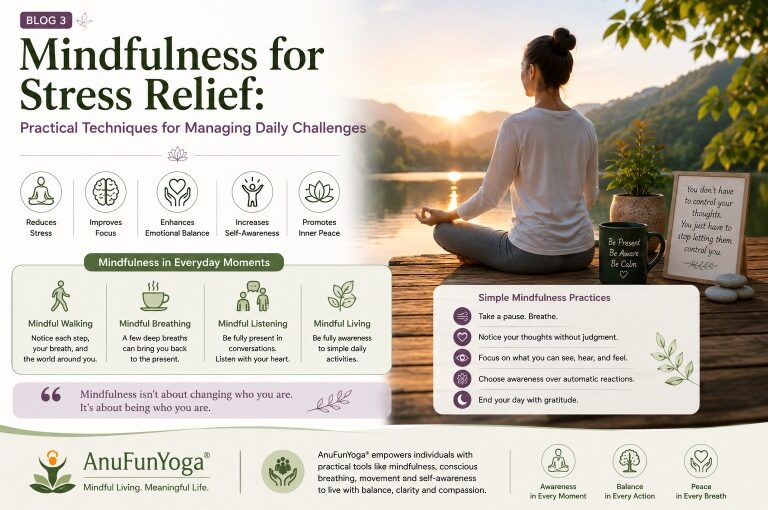
Simple Mindfulness Practices for Daily Life
Mindfulness does not require special equipment or large amounts of time. These simple exercises make mindfulness for stress relief easy to practice, even during a busy schedule.
Simple practices include:
Conscious Breathing
Taking a few slow, deliberate breaths can help bring attention back to the present moment.
Mindful Walking
Walking while paying attention to movement, surroundings, and breathing can create a sense of calm and focus.
Mindful Eating
Slowing down and paying attention to the experience of eating can improve awareness and reduce distracted habits.
Gratitude Reflection
Taking a few moments each day to appreciate positive experiences helps shift attention away from constant worry and stress.
Building a Sustainable Mindfulness Practice
The most effective mindfulness practice is one that can be maintained consistently. A consistent approach to mindfulness for stress relief often delivers greater long-term benefits than occasional practice.
Rather than aiming for perfection, individuals can begin with small steps:
- One minute of mindful breathing
- A short mindful walk
- A pause before responding during difficult conversations
- A moment of gratitude at the end of the day
These simple actions may appear small, but their effects often accumulate over time.
Consistency is more important than intensity.
Frequently Asked Questions
Is mindfulness the same as meditation?
Meditation is one way to practice mindfulness, but mindfulness can also be integrated into everyday activities and experiences.
How quickly can mindfulness reduce stress?
Some people notice immediate benefits from mindful breathing or awareness practices, while deeper changes often develop through consistent practice.
Do I need special training to practice mindfulness?
No. Anyone can begin by bringing more awareness to daily activities, thoughts, and emotions.
Can mindfulness help with emotional well-being?
Many individuals find that mindfulness supports emotional regulation, self-awareness, and healthier responses to stress.
How does mindfulness for stress relief help in daily life?
Regular mindfulness for stress relief practices can improve focus, emotional regulation, and resilience while reducing the impact of everyday stress.
Conclusion
Stress is a part of life, but how individuals respond to stress can make a significant difference in their overall well-being.
Mindfulness offers a practical and accessible approach to managing daily challenges. By developing greater awareness of thoughts, emotions, and experiences, people can create space for more thoughtful responses and healthier choices.
By practicing mindfulness for stress relief every day, individuals can develop healthier responses to stress, improve emotional balance, and enjoy greater overall well-being.
Whether practiced through mindful breathing, attentive listening, conscious movement, or simple moments of awareness, mindfulness can help individuals navigate life with greater balance, clarity, and resilience.
Ready to make mindfulness a part of your daily life? Contact us today to discover how AnuFunYoga® can help you build resilience, reduce stress, and improve your overall well-being.
In a world that constantly pulls attention in different directions, mindfulness offers an opportunity to return to the present moment-and to ourselves.