
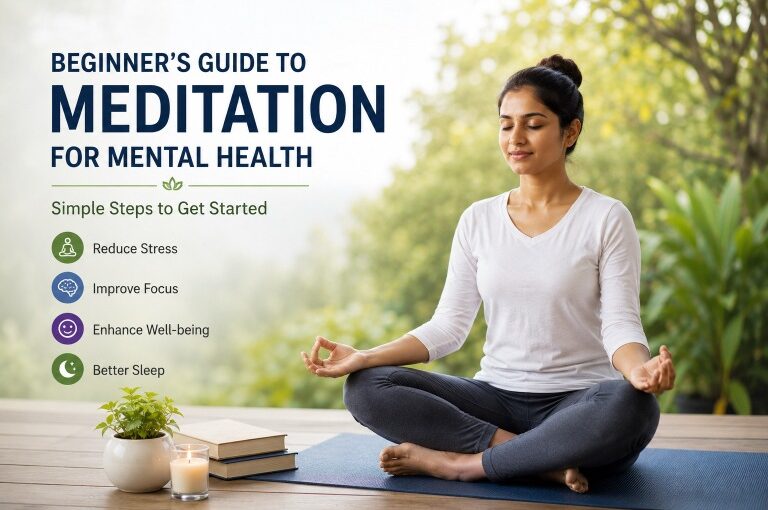
Introduction
Meditation for Mental Health is becoming one of the most effective ways to manage stress, improve emotional balance, and support overall well-being in today’s fast-moving world. Modern life often keeps the mind constantly active. Stress, overthinking, emotional fatigue, and digital overload have become part of everyday routines for many people.
In the middle of this constant mental activity, meditation offers something simple yet powerful: stillness.
Meditation is increasingly recognized as a valuable practice for supporting emotional balance, reducing stress, and improving mental clarity. The good news is that meditation does not need to be complicated. Even a few minutes of daily practice can create noticeable changes over time.
Organizations such as AnuAggarwalFoundation often integrate mindfulness and meditation-based practices into broader wellness approaches that support emotional well-being and inner balance.
Meditation for mental health is one of the most effective ways to reduce stress, improve emotional balance, and support overall well-being. Practicing meditation daily can help calm the mind and create a healthier lifestyle.
What Is Meditation?
Meditation is the practice of bringing awareness to the present moment.
Rather than trying to “stop thinking,” meditation teaches people how to:
- Observe thoughts calmly
- Focus attention
- Slow mental activity
- Create emotional balance
Meditation can involve:
- Breathing awareness
- Guided relaxation
- Mindfulness practices
- Silent observation
The purpose is not perfection, it is awareness.
How Meditation Supports Mental Health
Meditation directly influences the nervous system and emotional state.
Regular practice may help:
- Reduce stress and anxiety
- Improve emotional awareness
- Calm racing thoughts
- Improve concentration
- Support better sleep
Meditation also helps create space between thoughts and reactions, allowing people to respond more calmly during stressful situations.
Why Beginners Often Struggle
Many beginners believe meditation requires:
- Complete silence in the mind
- Long practice sessions
- Perfect focus
This misunderstanding often creates frustration.
In reality, meditation is simply about gently returning attention to the present moment whenever the mind wanders.
Distraction is normal.
The practice itself is the process of returning awareness calmly and without judgment.
Step 1: Start with Short Sessions
Beginners do not need to meditate for long periods.
Starting with:
- 5 minutes daily
- A quiet comfortable space
- Simple breathing awareness
is enough to build consistency.
Small daily practice is more effective than occasional long sessions.
Step 2: Focus on the Breath
Breathing is one of the easiest meditation anchors for beginners.
Try this:
- Sit comfortably
- Close your eyes gently
- Observe the natural movement of your breath
There is no need to control breathing. Simply notice each inhale and exhale.
When thoughts arise, gently return attention to the breath.
Step 3: Create a Simple Routine
Meditation becomes easier when practiced regularly.
Helpful habits include:
- Meditating at the same time daily
- Practicing in a calm space
- Reducing distractions during practice
Morning or evening routines often work best for beginners.
Step 4: Practice Mindfulness During the Day
Meditation does not only happen while sitting quietly.
Simple moments of mindfulness can happen while:
- Walking
- Eating
- Drinking tea
- Taking breaks from screens
This connects closely with broader mindfulness for stress relief practices that bring awareness into daily life.
Meditation and Emotional Wellness
Meditation is not only about relaxation, it also supports emotional resilience.
By slowing down mental activity, meditation helps people:
- Become more emotionally aware
- Recognize stress earlier
- Feel calmer internally
- Build healthier responses to difficult emotions
This is why meditation is increasingly included within broader holistic mental wellness programs.
Common Beginner Mistakes
Beginners often:
- Expect instant calm
- Judge themselves too harshly
- Try too hard to “clear the mind”
Meditation works gradually.
Some days feel calm. Others feel distracted.
Consistency matters more than perfection.
Conclusion
Meditation is one of the simplest ways to reconnect with mental clarity and emotional balance in a fast-moving world.
It does not require expertise, complicated techniques, or major lifestyle changes.
Just a few quiet moments each day can gradually create:
- greater calm
- better focus
- emotional stability
- deeper self-awareness
Because sometimes the mind does not need more stimulation.
It simply needs a moment to breathe.
In conclusion, meditation for mental health is a simple yet powerful practice that can improve both mental and emotional wellness. Even a few minutes of meditation each day can make a positive difference.
Start your meditation journey today and experience how a few mindful minutes can create lasting mental and emotional balance.
FAQ
What is meditation for mental health?
Meditation for mental health is a mindfulness practice that helps calm the mind, reduce stress, improve emotional balance, and support overall mental well-being through focused awareness and relaxation techniques.
Can beginners practice meditation daily?
Yes, beginners can start meditation with just 5 to 10 minutes daily. Consistent short sessions are often more effective than long occasional practices.
How does meditation help reduce stress and anxiety?
Meditation helps slow racing thoughts, relax the nervous system, improve emotional awareness, and create a sense of calm that reduces stress and anxiety over time.
What is the best meditation technique for beginners?
Breathing meditation is one of the easiest techniques for beginners. It involves focusing attention on natural breathing and gently returning focus whenever the mind wanders.
How long does it take to see results from meditation?
Many people notice improved calmness and focus within a few days or weeks of regular practice, though long-term emotional benefits grow with consistency.