
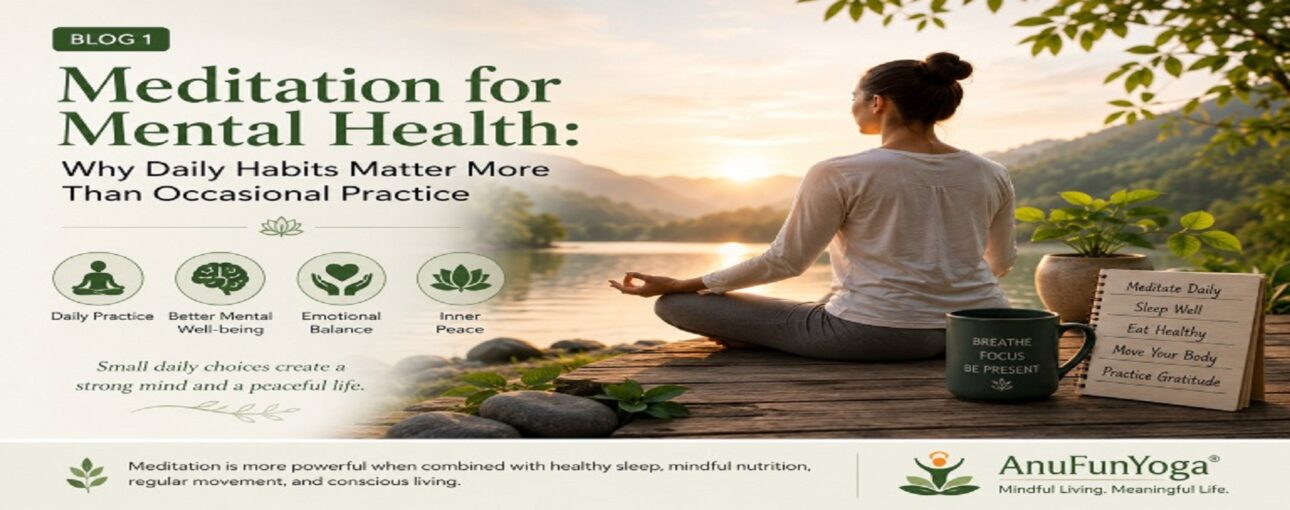
Introduction
Meditation has become one of the most widely discussed practices for improving mental health and emotional well-being. People across the world are turning to meditation to manage stress, improve focus, support emotional balance, and create a greater sense of calm in their daily lives.
Meditation for Mental Health is increasingly recognized as an effective way to support emotional balance, reduce stress, and promote overall well-being as part of a healthy lifestyle.
While meditation can be a valuable tool, many individuals approach it with unrealistic expectations. Some expect a few minutes of meditation to immediately eliminate stress, improve mood, or solve long-standing emotional challenges. When these expectations are not met, they often abandon the practice altogether.
The reality is that meditation works best when it is supported by healthy daily habits. Mental well-being is influenced not only by meditation but also by sleep, nutrition, movement, relationships, emotional awareness, and lifestyle choices. Meditation is most effective when it becomes part of a broader approach to wellness rather than an isolated activity.
Understanding this connection can help individuals build sustainable habits that support long-term mental health and emotional resilience.
Understanding Meditation and Mental Health
Meditation is the practice of bringing attention to the present moment with awareness and without judgment. Through regular practice, individuals can become more aware of their thoughts, emotions, and behavioral patterns.
Meditation for Mental Health helps individuals develop greater awareness, emotional resilience, and healthier responses to everyday challenges.
Research continues to suggest that meditation may help support:
- Emotional regulation
- Stress management
- Mental clarity
- Improved concentration
- Greater self-awareness
- A sense of calm and balance
However, meditation is not intended to eliminate all difficulties from life. Instead, it helps individuals develop healthier ways of responding to life’s challenges.
Like physical fitness, mental well-being develops gradually through consistent effort and practice.
Why Consistency Matters More Than Intensity
Many people approach meditation the same way they approach short-term fitness goals. They meditate intensely for a few days or weeks and then stop when life becomes busy.
The benefits of meditation often come not from occasional long sessions but from regular, sustainable practice.
Even ten minutes of daily meditation can have a greater long-term impact than an hour-long session practiced once every few weeks.
Consistency helps train the mind to:
- Develop awareness
- Improve focus
- Recognize emotional triggers
- Respond more thoughtfully to stress
Small daily practices create cumulative benefits over time.
The Importance of Sleep
One of the most overlooked factors affecting mental health is sleep.
Poor sleep can influence:
- Mood
- Concentration
- Energy levels
- Emotional balance
- Stress response
Meditation may help support relaxation, but it cannot fully compensate for chronic sleep deprivation.
Creating healthy sleep habits such as maintaining a regular bedtime, reducing screen exposure before sleep, and establishing a calming nighttime routine can significantly improve mental well-being.
When meditation is combined with adequate rest, individuals often experience greater emotional stability and mental clarity.
Nutrition and Emotional Well-being
The connection between nutrition and mental health is becoming increasingly recognized.
What people eat can influence:
- Energy levels
- Mood
- Focus
- Emotional regulation
While meditation supports awareness and mental calmness, healthy nutrition provides the body and brain with the resources needed to function effectively.
Balanced meals, hydration, and mindful eating habits can complement meditation and contribute to overall wellness.
Mental health is influenced by the entire lifestyle, not by any single practice alone.
The Role of Movement
Physical activity plays an important role in emotional well-being.
Regular movement can help:
- Reduce stress
- Improve mood
- Increase energy
- Support healthy sleep
- Enhance overall well-being
Movement does not need to be intense to be beneficial.
Walking, stretching, yoga, dancing, and other forms of gentle activity can all contribute to better mental health.
When combined with meditation, movement helps create a more balanced and sustainable wellness routine.
The AnuFunYoga® Approach
AnuFunYoga® views meditation not as an isolated activity but as part of a holistic lifestyle that includes breath awareness, emotional balance, mindful living, and self-reflection. When supported by healthy daily habits, meditation becomes a sustainable tool for long-term well-being.
This approach recognizes that true wellness involves the integration of mind, body, emotions, and daily lifestyle choices. Rather than seeking quick fixes, individuals are encouraged to cultivate awareness through simple practices that can be incorporated into everyday life.
By combining meditation with healthy routines and conscious living, people can create a stronger foundation for emotional resilience and overall well-being.
Building Sustainable Mental Wellness
Mental wellness is not built through occasional efforts.
It develops through small actions repeated consistently over time.
Meditation for Mental Health becomes more effective when practiced consistently alongside healthy daily habits and mindful lifestyle choices.
Examples include:
- Daily meditation
- Regular sleep schedules
- Healthy nutrition
- Physical movement
- Gratitude practices
- Breath awareness
- Meaningful social connections
These habits work together to support emotional and mental well-being.
The goal is not perfection but consistency.
Frequently Asked Questions
How often should I meditate for mental health?
Even 10–15 minutes of daily meditation can be beneficial when practiced consistently.
Can meditation replace other healthy habits?
No. Meditation is most effective when combined with healthy sleep, nutrition, movement, and supportive relationships.
How long does it take to experience benefits?
The experience varies for each individual. Many people notice improvements in awareness and stress management through regular practice over time.
Is meditation only for stress relief?
No. Meditation can also support focus, self-awareness, emotional balance, and overall well-being.
Can meditation alone improve mental health?
Meditation can significantly support mental health by improving awareness, reducing stress, and enhancing emotional balance. However, Meditation for Mental Health works best when combined with healthy daily habits like good sleep, proper nutrition, regular movement, and meaningful social connections for long-term well-being.
Conclusion
Meditation for Mental Health is most effective when practiced consistently as part of a balanced lifestyle.
Meditation can be a powerful tool for supporting mental health, but it works best as part of a larger lifestyle approach.
Rather than relying on occasional meditation sessions, individuals can benefit from creating daily habits that support emotional balance, physical health, and self-awareness.
When meditation is combined with healthy sleep, mindful nutrition, regular movement, and conscious living practices, it becomes a sustainable pathway toward long-term well-being.
In the end, lasting mental wellness is rarely built through one practice alone. It is created through the small, consistent choices that people make every day.
AnuFunYoga® in Practice
AnuFunYoga® is more than a meditation practice; it is a holistic lifestyle science that integrates breath awareness, mindfulness, movement, emotional balance, and conscious living. Through community programs, wellness initiatives, and educational outreach, AnuFunYoga® encourages individuals to develop simple daily habits that support long-term well-being. The approach recognizes that mental health is influenced by how we live each day-how we breathe, move, think, relate to others, and care for ourselves. By making awareness a part of everyday life rather than limiting it to occasional practice, individuals can build greater resilience, clarity, and emotional balance over time. Through its holistic approach, Meditation for Mental Health becomes a practical daily habit that supports lasting emotional balance and overall well-being.