
Introduction
Stress is one of the most common challenges people face today. Whether it comes from work, studies, financial responsibilities, family commitments, or the constant flow of information through digital devices, stress has become part of everyday life.
While short periods of stress can sometimes help people stay focused and motivated, ongoing stress can affect emotional well-being, physical health, relationships, sleep, and productivity. Many people search for quick fixes that promise immediate relief, but lasting stress management is rarely achieved through temporary solutions.
The most effective stress relief techniques are practical, sustainable, and easy to incorporate into everyday life. Rather than eliminating stress completely, they help individuals develop the emotional resilience needed to respond to life’s challenges with greater balance and confidence.
Understanding Everyday Stress
Stress is the body’s natural response to situations that require attention or action. However, when the body remains in a prolonged state of alertness, it can begin to affect both mental and physical well-being.
Common causes of everyday stress include:
- Heavy workloads and deadlines
- Financial concerns
- Family responsibilities
- Academic pressure
- Relationship conflicts
- Poor sleep
- Information overload from digital devices
Recognizing the sources of stress is the first step toward managing it effectively.
Understanding the causes of stress also makes it easier to choose stress relief techniques that fit your lifestyle and personal needs.
Why Quick Solutions Rarely Last
Many people attempt to escape stress by distracting themselves or seeking temporary comfort.
Common responses include:
- Excessive social media scrolling
- Emotional eating
- Working even longer hours
- Avoiding difficult conversations
- Ignoring physical and emotional exhaustion
While these habits may provide short-term relief, they often leave the underlying stress unchanged.
Sustainable stress management is built through consistent lifestyle habits that strengthen emotional resilience rather than simply masking discomfort.
Stress Relief Techniques That Support Everyday Well-being
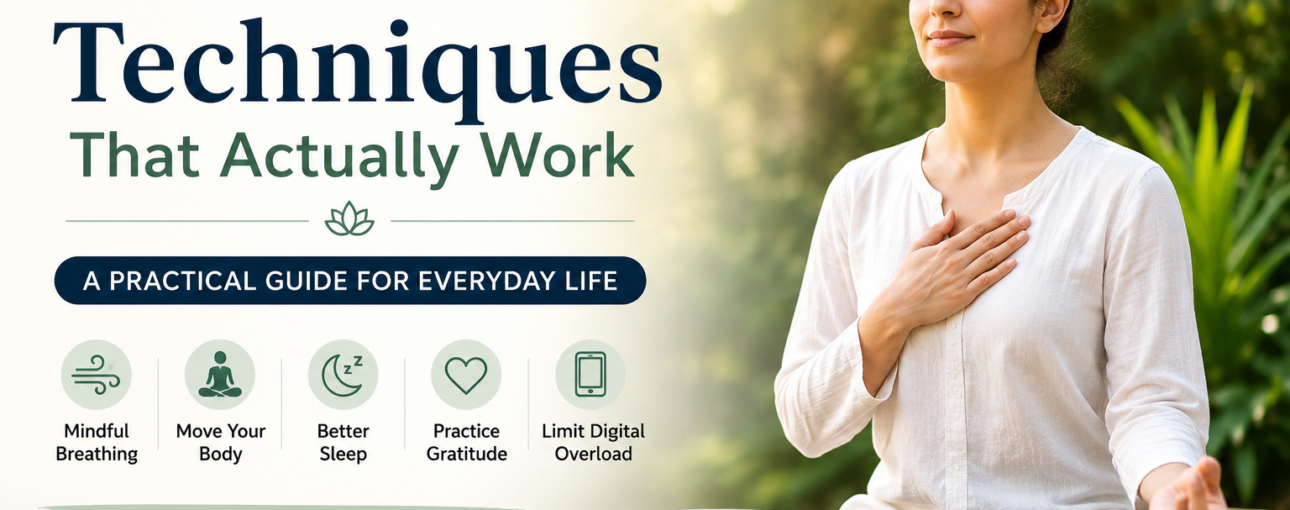
Practice Conscious Breathing
Breathing is one of the simplest yet most effective ways to calm the mind.
Taking slow, intentional breaths helps interrupt the cycle of tension and encourages greater awareness of the present moment.
Even a few minutes of mindful breathing during a busy day can help improve focus and reduce feelings of overwhelm.
Move Your Body
Physical movement helps release accumulated tension and supports emotional well-being.
Activities such as walking, yoga, stretching, dancing, or cycling can improve mood while reducing physical stress.
The goal is not intense exercise but consistent movement.
Prioritize Rest and Sleep
Sleep is essential for emotional regulation.
Without adequate rest, people often become more reactive, less patient, and less able to cope with everyday challenges.
Creating a consistent sleep routine can significantly improve emotional resilience.
Limit Digital Overload
Constant notifications and information can increase mental fatigue.
Scheduling regular breaks from screens allows the mind to recover and improves concentration throughout the day.
Practice Gratitude
Gratitude shifts attention away from constant worry toward appreciation.
Keeping a simple gratitude journal or reflecting on positive moments each day can help create a healthier emotional perspective over time.
Among the many stress relief techniques, practicing gratitude is a simple habit that can improve emotional balance and reduce negative thinking over time.
Building Emotional Resilience
Stress relief is not simply about feeling calm in the moment.
It is also about becoming emotionally stronger.
Emotional resilience allows individuals to:
- Adapt to change
- Recover from setbacks
- Think more clearly under pressure
- Maintain healthier relationships
- Make balanced decisions
Like physical fitness, emotional resilience develops gradually through regular practice.
Every small habit contributes to greater long-term well-being.
The AnuFunYoga® Approach to Stress Relief
AnuFunYoga® views stress management as a journey of building emotional resilience rather than seeking temporary escape from life’s challenges. The philosophy integrates mindful breathing, movement, self-awareness, emotional balance, and conscious daily living to help individuals respond to stress with greater clarity and confidence.
Through wellness workshops and community outreach programs, AnuFunYoga® encourages people to recognize their personal stress patterns and develop practical habits that support long-term well-being. Instead of reacting automatically to difficult situations, participants learn to pause, observe, breathe, and choose more balanced responses.
The AnuFunYoga® philosophy combines proven stress relief techniques with mindfulness, movement, and self-awareness to promote lasting emotional well-being.
This holistic approach recognizes that lasting stress relief comes from transforming everyday habits rather than searching for quick solutions.
Creating a Personal Stress-Management Routine
Every person experiences stress differently.
The most effective routine is one that fits naturally into daily life.
A simple routine might include:
- Five minutes of mindful breathing each morning
- A daily walk or gentle movement practice
- Short breaks during work
- Limiting unnecessary screen time
- Practicing gratitude before bed
- Spending time in nature
- Connecting with supportive family and friends
Small actions practiced consistently often produce greater long-term benefits than occasional intensive efforts.
Frequently Asked Questions
What is the best stress relief technique?
There is no single technique that works for everyone. A combination of mindful breathing, movement, healthy sleep, and self-awareness often provides the greatest long-term benefit.
How can I reduce stress during a busy workday?
Taking short breathing breaks, focusing on one task at a time, and stepping away from screens for a few minutes can help reduce stress throughout the day.
Does exercise help with stress?
Yes. Regular physical activity supports both physical and emotional well-being and is one of the most effective long-term stress-management strategies.
How long does it take to build emotional resilience?
Emotional resilience develops gradually. Small, consistent lifestyle changes practiced over time often lead to meaningful improvements.
Conclusion
Stress is an unavoidable part of modern life, but it does not have to control how we live.
By adopting practical stress relief techniques and developing healthier daily habits, individuals can build emotional resilience, improve their well-being, and respond to challenges with greater confidence.
The goal is not to eliminate every source of stress but to strengthen the ability to navigate life with awareness, balance, and inner stability.
If you’re looking for practical stress relief techniques and holistic wellness support, contact the Anu Aggarwal Foundation to discover programs that help build emotional resilience and inner balance.
Lasting well-being is created through the small choices we make every day-and every mindful breath, healthy habit, and positive action becomes another step toward a calmer and more resilient life.