
Introduction
Breathing is one of the most natural processes in human life. It happens continuously, often without conscious attention. Yet despite its simplicity, breathing has a profound influence on physical health, emotional balance, and overall well-being.
Mindfulness for Stress Relief has gained increasing attention as a simple and effective practice for supporting emotional balance, mental clarity, and overall well-being.
In recent years, growing scientific research has highlighted the powerful connection between breath and the nervous system. Conscious breathing practices are increasingly being recognized as valuable tools for managing stress, improving emotional resilience, and supporting mental clarity.
While people often focus on external solutions for well-being, the breath remains one of the most accessible and effective resources available to everyone. Learning to work with the breath consciously can help create greater balance in a world that often feels fast-paced and overwhelming.
Organizations such as AnuAggarwalFoundation continue to promote awareness around holistic wellness practices that encourage healthier and more balanced lifestyles.
Why Breathing Matters
Breathing is directly connected to the body’s nervous system.
When people feel stressed, anxious, or overwhelmed, breathing often becomes:
- Shallow
- Rapid
- Irregular
On the other hand, when individuals feel calm and relaxed, breathing naturally becomes:
- Slower
- Deeper
- More rhythmic
This relationship works in both directions.
Just as emotions affect breathing, conscious breathing can also influence emotional states.
This is why breathing techniques are increasingly used to support emotional regulation and stress management.
The Connection Between Breath and Stress
Modern life exposes people to constant stimulation.
Work pressures, digital overload, social expectations, and daily responsibilities can keep the body in a heightened state of alertness.
Conscious breathing is often considered a key component of Mindfulness for Stress Relief, helping individuals manage daily pressures with greater awareness and calmness.
When stress becomes chronic, individuals may experience:
- Mental fatigue
- Difficulty concentrating
- Irritability
- Sleep disturbances
- Emotional exhaustion
Conscious breathing helps activate the body’s relaxation response.
By slowing the breath and bringing awareness to each inhalation and exhalation, people can encourage the nervous system to shift from stress toward calmness and balance.
Breath Awareness and Emotional Balance
Many people are surprised to discover how closely emotions and breathing are connected.
Moments of fear, frustration, anger, or anxiety often create noticeable changes in breathing patterns.
Practicing Mindfulness for Stress Relief through breath awareness can help people respond more thoughtfully to challenges rather than reacting automatically to stress.
Developing awareness of the breath can help individuals:
- Recognize emotional reactions earlier
- Respond more calmly during stressful situations
- Improve emotional regulation
- Increase self-awareness
This simple practice creates space between emotional triggers and automatic reactions.
Over time, this can lead to greater emotional resilience and stability.
Breathing as a Lifestyle Practice
Conscious breathing does not require complicated equipment or lengthy training.
Simple practices such as:
- Taking slow, deep breaths
- Pausing before reacting
- Spending a few minutes focusing on breathing each day
- Practicing mindful breathing during stressful moments
can create meaningful benefits over time.
The key is consistency rather than perfection.
When incorporated into daily routines, Mindfulness for Stress Relief techniques such as mindful breathing can contribute to long-term emotional resilience and relaxation.
Small daily practices often have a greater impact than occasional intensive efforts.
The Role of AnuFunYoga®
AnuFunYoga® is a holistic lifestyle science that integrates mindfulness, breath awareness, emotional balance, movement, and conscious living practices to support overall well-being.
Within this approach, conscious breathing is viewed not merely as a physical technique but as a powerful tool for cultivating self-awareness, emotional balance, and inner resilience.
By bringing attention to the breath, individuals can develop a deeper connection with themselves and create healthier responses to life’s everyday challenges.
The Benefits of Conscious Breathing
Regular breath awareness practices may support:
- Reduced stress levels
- Improved focus and concentration
- Better emotional regulation
- Increased self-awareness
- Greater mental clarity
- Enhanced feelings of calmness and well-being
These benefits make conscious breathing a valuable addition to broader wellness routines.
Breath and Mindfulness
Mindfulness and breathing naturally complement one another.
Mindfulness encourages attention to the present moment, while breathing provides a simple anchor for that awareness.
When individuals focus on their breath, they often become:
- More present
- Less distracted
- More emotionally balanced
- Better able to manage stress
This is one reason why breathing exercises are commonly included in meditation and mindfulness practices around the world.
Bringing Awareness into Daily Life
The beauty of breathing practices lies in their accessibility.
They can be practiced:
- At home
- At work
- During travel
- Before important meetings
- During stressful situations
Even a few conscious breaths can help shift attention away from overwhelm and back toward balance.
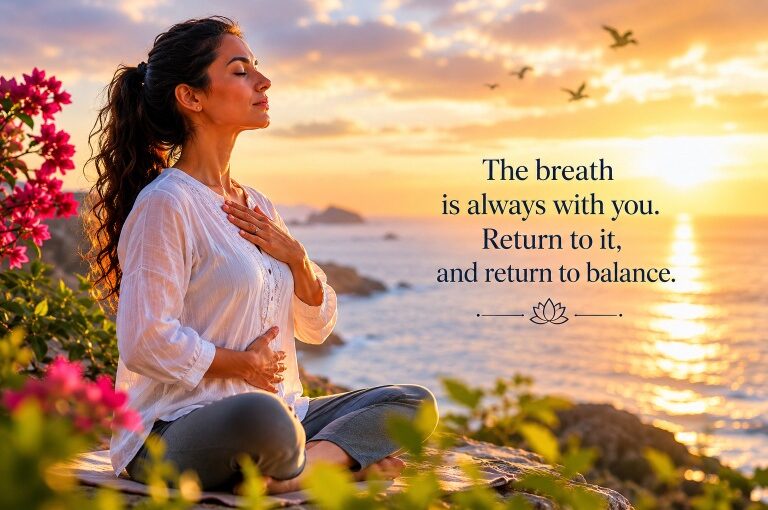
The practice is always available because the breath is always present.
Conclusion
In a world filled with constant activity and distraction, the breath offers a simple yet powerful pathway back to balance.
Scientific understanding continues to support what many traditional wellness practices have recognized for centuries: breathing influences both physical and emotional well-being.
By developing greater awareness of the breath, individuals can improve emotional resilience, reduce stress, and cultivate a deeper sense of calm and clarity.
Sometimes the most powerful tools for well-being are also the simplest.
And few tools are as close, constant, and accessible as the breath itself
FAQs
1. What is Mindfulness for Stress Relief?
Mindfulness for Stress Relief is the practice of focusing on the present moment with awareness and acceptance. Techniques such as conscious breathing can help reduce stress, improve emotional balance, and promote overall well-being.
2. How does conscious breathing help reduce stress?
Conscious breathing helps activate the body’s relaxation response by slowing the heart rate and calming the nervous system. This can reduce feelings of stress, anxiety, and emotional overwhelm.
3. Can Mindfulness for Stress Relief improve emotional well-being?
Yes. Regular mindfulness and breath-awareness practices can improve emotional regulation, increase self-awareness, and help individuals respond more calmly to everyday challenges.
4. How often should I practice mindful breathing?
Even a few minutes of mindful breathing each day can be beneficial. Consistent practice is more important than duration when using Mindfulness for Stress Relief techniques.
5. What are the benefits of combining mindfulness and breathing exercises?
Combining mindfulness with breathing exercises can support stress reduction, mental clarity, emotional resilience, improved focus, and a greater sense of calm in daily life.