
Introduction
Safety is often defined by external factors, secure environments, protective measures, and awareness of risks. While these are important, they are only one part of the picture.
True safety begins within.
For many women, the challenge is not just navigating the outside world, but also managing internal responses, fear, hesitation, self-doubt, or emotional overwhelm. This is where modern women safety awareness programs are evolving. They are no longer limited to precaution; they are becoming pathways to inner strength, awareness, and healing.
At organizations like Anu Aggarwal Foundation, safety is approached as a holistic experience, where mindfulness, body awareness, and emotional resilience are as important as external preparedness.
Rethinking Safety: From Protection to Awareness
Traditional safety programs focus on:
- Self-defense techniques
- Risk identification
- Legal awareness
- Emergency response
These are essential. But without inner clarity, even the best tools may not be fully effective.
Safety awareness today is shifting toward a deeper understanding:
Awareness is not just about the surroundings. It is about the state of the mind.
When the mind is scattered or overwhelmed, responses become reactive. When the mind is steady, responses become clear and effective.
The Role of Mindfulness in Women Safety Awareness Programs
Mindfulness is the ability to remain present, aware, and grounded in the moment. In the context of safety, this becomes a powerful tool.
Practices such as mindfulness for stress relief help women:
- Stay calm in high-pressure situations
- Recognize subtle signals and intuition
- Respond rather than react
- Maintain clarity under stress
This is not just a wellness practice; it is a practical life skill.
Many safety awareness programs are now integrating mindfulness and breathwork because they directly influence how a person perceives and responds to situations.
Healing and Safety: The Missing Link
For many individuals, fear and anxiety are not always linked to present situations. They may arise from past experiences that the body and mind continue to hold.
This is where trauma healing programs become an essential part of the conversation.
When unresolved emotional experiences exist, they can:
- Affect decision-making
- Create heightened fear responses
- Reduce confidence in challenging situations
Mindfulness, breath awareness, and gentle body practices help release stored tension and rebuild a sense of safety within.
Safety, then, is not just learned; it is restored.
Building Inner Stability Through Mind-Body Practices
Programs that integrate mind-body awareness (often expressed through yoga and breathwork) create a deeper level of empowerment.
These practices help women:
- Develop a strong connection with their body
- Recognize internal signals and intuition
- Build emotional balance
- Cultivate confidence that is not dependent on external validation
This inner stability becomes the foundation of all external action.
Psychological Safety: Confidence from Within
A woman who feels internally grounded is more likely to:
- Trust her instincts
- Set clear boundaries
- Speak with clarity
- Take timely action
Safety is not only about avoiding danger, it is about feeling secure in one’s own presence.
This psychological dimension is increasingly being recognized as a core element of effective women safety awareness programs.
Community and Collective Strength
Safety also grows in community.
When women come together in awareness programs, they create:
- Shared learning
- Emotional support
- Collective confidence
Community-based initiatives, including those led by AnuAggarwalFoundation, often integrate safety awareness with broader themes of wellness, empowerment, and healing, creating a more sustainable impact.
Integrating Safety with Holistic Well-being
True empowerment happens when safety is not treated as a separate concept, but as part of a larger system that includes:
- Mental well-being
- Emotional resilience
- Physical awareness
- Conscious living
This is where holistic mental wellness programs and safety awareness intersect.
Safety becomes not just a reaction to the world, but a state of being.
Conclusion
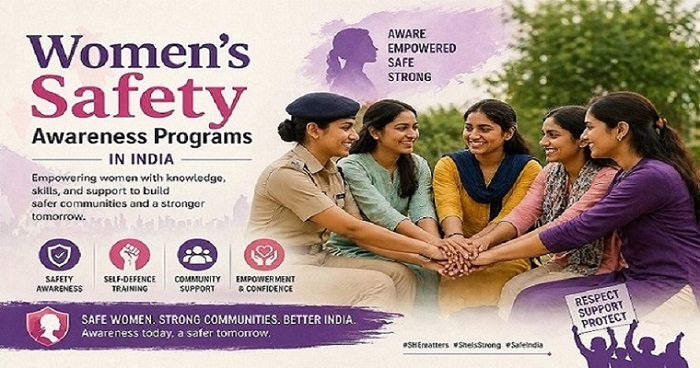
Women safety awareness programs in India are evolving; from protection to presence, from fear to awareness, from reaction to clarity.
External tools remain important. But the deepest shift happens when a woman feels stable, aware, and confident within herself.
Because real safety is not just about the world outside.
It is about the space you create within.
And from that space, every step becomes stronger, clearer, and free.
FAQs
Q1. What are Women Safety Awareness Programs?
Women Safety Awareness Programs are initiatives designed to educate women about personal safety, self-defense, emotional resilience, and situational awareness to help them respond effectively to real-world challenges.
Q2. Why are Women Safety Awareness Programs important in India?
With rising urbanization and digital exposure, these programs help women build confidence, awareness, and preparedness—both physically and mentally.
Q3. How does mindfulness help in women’s safety?
Mindfulness improves focus, reduces panic, and helps women make clear decisions in stressful situations, enhancing overall safety.
Q4. What is the role of emotional resilience in safety?
Emotional resilience allows women to stay calm, trust their instincts, and respond effectively rather than react impulsively.
Q5. Are modern safety programs only about self-defense?
No, modern Women Safety Awareness Programs also include mental wellness, trauma healing, and confidence-building practices.
Take the first step toward true empowerment. Explore Women Safety Awareness Programs at Anu Aggarwal Foundation and begin your journey toward inner strength and confidence.