
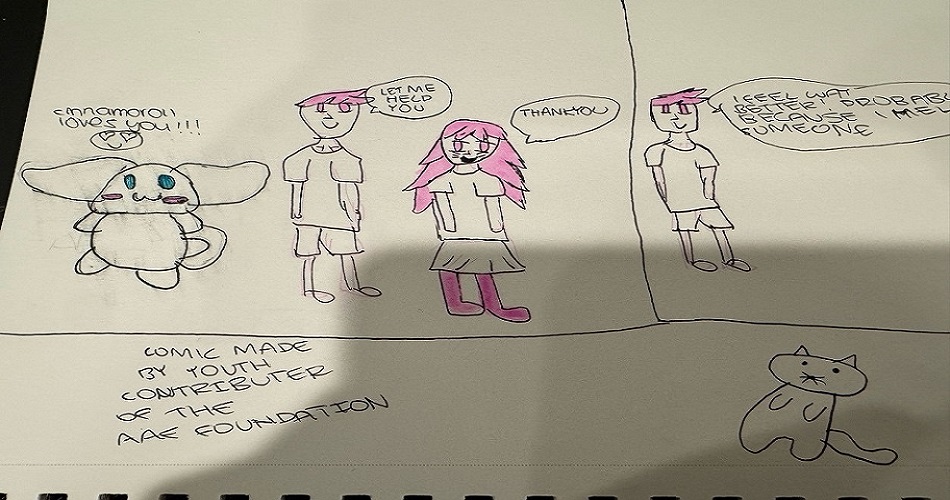
Many of us spend hours on our phones without even realizing it. Preoccupied with screens, the thought of lending a helping hand often doesn’t cross our minds — even when a family member nearby could use support. I’ll admit, I’m guilty of this too. I’m often on an electronic device when my mom needs help with the laundry or when my dad asks for help with the dishes.
Throughout our lives — probably yours as well — there are countless opportunities to help someone right in front of us. We just don’t always notice them. What an unfortunate way to miss out on the many benefits of one simple action.
Helping others is almost instinctual to humankind. Collective learning — the backbone of all human invention — would not have been possible without people helping one another. Even basic survival in early human history, like hunting or raising families, depended on cooperation. Helping others is something our ancestors have practiced since the dawn of humanity.
The joy of helping someone is difficult to explain, yet undeniable. But did you know there’s science behind why helping others makes us feel good? When you help someone, your brain releases dopamine and endorphins — chemicals responsible for happiness and emotional well-being. This shows that helping others is hardwired into us as biological beings. By helping others, we are also helping ourselves.
The science behind helping others is especially relevant for today’s youth. According to a recent study conducted by UTHealth Houston, children and teenagers who volunteer tend to flourish both mentally and physically. Research from UC Berkeley also suggests that depression and anxiety are more common among young people who do not volunteer. Helping others, therefore, can be a meaningful way to address some of today’s mental health challenges.
I can personally relate to this. I have struggled with depression and anxiety myself. During those difficult periods, I often fell into cycles of self-pity and endless doomscrolling. One day, instead of returning to those habits, I decided to look for ways to help others. I began creating slides to teach English to a recent immigrant to the United States from a non-English-speaking country. I also started writing blogs — including the one you’re reading now.
The happiness, pride, and excitement I felt from these small actions helped pull me out of that negative spiral.
Helping others doesn’t have to be complicated. It can be as simple as picking up a pencil for someone sitting next to you or holding the door open for another person. It can also take larger forms, like organizing a fundraiser for a cause you care about or volunteering your skills — such as building a website or teaching coding — for free to someone who needs them.
Whether simple or complex, helping others is always an option if we choose it. It brings rewards not only to those we help, but also to ourselves. Our society benefits when people support one another. Since cooperation is hardwired into us, perhaps instead of resisting it, we should lean into our instincts and choose to live as more compassionate, connected human beings.